


Fieldnotes is a weekly read for the people inside companies who shape how AI gets used. Learn more about Superadditive.
This week’s main thing
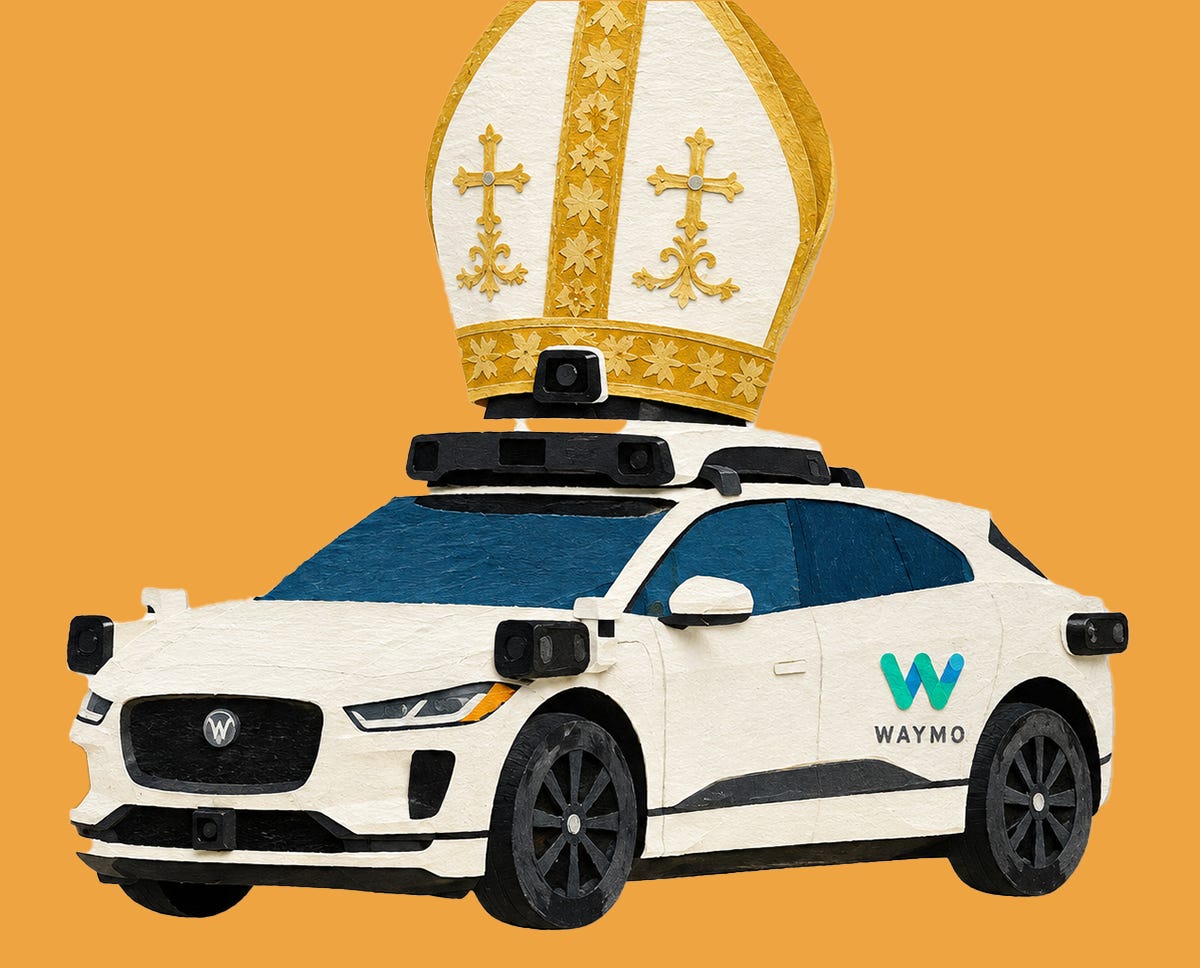
This week the moral conversation about AI at work came to a head. Inside Meta, employees papered bathrooms and vending machines with flyers asking, “Don’t want to work at the Employee Data Extraction Factory?”, protesting software the company put on laptops that records keystrokes, clicks, and screen snapshots to train AI, rolled out as it cut 8,000 jobs. This same week, Pope Leo XIV issued his first encyclical, Magnifica Humanitas, 83 pages warning that handing decisions to machines can “weaken personal creativity and judgment” and that the deeper risk of the chatbot age is that people “lose the desire to seek other people at all.”
When both the Vatican and Meta’s engineers are questioning what’s right and wrong here, we should take the morality of the thing seriously.
Business has spent a generation or more fixated on one moral question: do companies have a responsibility to serve anyone other than their shareholders?
A lot of ink has been spilled on this topic, but the lived reality for most executives is that they’re expected to serve shareholders above all others and yet speak publicly as if they don’t (especially at Davos). And most of us are fine (ish) with that arrangement so long as we can buy nice things like a tank of gas.
Until, that is, the equation becomes too lopsided.
AI firms have sold a vision for the future that is both adversarial to humanity (e.g. Artisan’s “stop hiring humans” billboards) and inescapable. The future is a one person company and there’s nothing you can do about it.
But it turns out that employees don’t want to be Soylent (green or other) for shareholders.
And the AI industry is finally paying attention. At least, narratively. Dario Amodei, who a year ago said AI could erase half of entry-level white-collar jobs, now says automation will expand the work people do. Jensen Huang calls the AI-to-layoffs narrative “just too lazy.”
Organizations have to pay attention to this narrative shift, and this shift is an opportunity for you to influence these decisions.
Here’s what to say to your CEO this week: Whether we like it or not, the morality of AI-related decisions is in the news and on the minds of literally everyone in the org. Before we ship our next AI move, let’s ask ourselves one question: would we make this same decision if we had to tell the people it affected most face-to-face? This isn’t meant to shame us, but we should know what our defensible case is for this decision and we should feel capable of carrying it out.
This week’s move: make decisions as if you had to do explain it face to face
It’s fashionable these days to fire people via a mass email. Yes, it’s logistically hard to fire 8,000 people in the same day but it comes with the added benefit of not having to stand in front of someone and defend the decision. And to us, that makes it too easy to make a bad decision.
Having to explain your decision face-to-face forces you to reckon with the following:
One: for whom? Who benefits and who pays the cost? And are we weighing that balance strategically, or did we chase a single variable (or narrative) to an indefensible conclusion?
Two: by whom? Who made the call? One person? A layer or a committee? A vague “the company?” Or even worse, “the system?” A danger isn’t just that machines make more decisions, it’s that the machine becomes the place accountability goes to disappear. The temptation to launder an unpopular decision through it grows in exact proportion to how unpopular the decision is. We already know people are likelier to hand a machine the firings than the promotions, after all.
Ultimately, a CEO who runs through both questions and still does the hard thing has at least done a balanced, owned, hard thing. That is a categorically different position, legally, reputationally, and morally, than having optimized blindly and let the system take the blame.
(If you are letting folks go, we did publish a better how-to on that.)
Top stories
Meta’s “Model Capability Initiative” triggers an internal revolt. Meta installed software on US employees’ work laptops that captures keystrokes, mouse movements, clicks, and screen snapshots, to train AI agents on how people actually work, with no opt-out on company devices (CTO Andrew Bosworth confirmed as much in writing; EU staff are exempt under GDPR). First reported by Reuters in late April; by mid-May, flyers branding it an “Employee Data Extraction Factory” appeared across US offices, a petition circulated, and UK staff began organizing with United Tech and Allied Workers. It landed alongside roughly 8,000 layoffs and 7,000 internal moves into new AI teams. The Next Web
Jensen Huang calls the AI-layoffs narrative “too lazy.” Nvidia’s CEO, speaking to CNA on May 26, pushed back on executives crediting AI for job cuts: “the narrative that connects AI to job loss... is just too lazy.” He pressed the timeline, asking how AI “became productive and useful only six months ago” but was being blamed for layoffs two years ago. It echoes his earlier line that leaders cutting staff to deploy AI are “out of imagination”, notable coming from the company selling the picks and shovels. TheStreet
Pope Leo XIV’s first encyclical takes on AI. Magnifica Humanitas, released May 25, runs 83 pages and frames AI as a new industrial revolution that must not “redefine what it means to be human.” Leo, who took his name from Leo XIII (whose 1891 Rerum Novarum addressed worker dignity in the first industrial age), warns that handing decisions to machines can weaken human judgment, and calls to “disarm AI” from purely economic and military competition. Religion News Service
Gartner: the layoffs and the returns don’t correlate. A Gartner survey of 350 executives at firms with $1B+ revenue, covered by Fortune, found that 80% of those piloting AI reported workforce reductions, but the cuts showed no correlation to ROI: the companies seeing real returns were not the ones cutting staff. Gartner’s Helen Poitevin put it plainly, “chasing value only through headcount reduction is likely to lead most organizations down a path of limited returns.” The highest-gain firms used AI for “people amplification,” not replacement. Fortune
Vendors pitch “governed autonomy” at the Gartner CFO Symposium. At the symposium (May 26–29), finance-AI vendors began marketing frameworks that let autonomous agents execute work inside preset guardrails instead of requiring human sign-off, with one CEO arguing the bottleneck has shifted “from doing the work to approving it.” It’s the first clear move to sell removal of the human decider as a feature. GlobeNewswire
Last time around
May 15, 1891. Pope Leo XIII signs Rerum Novarum, “Of New Things,” and for the first time the Catholic Church puts its full moral weight behind a position on industrial labor. The factory system had been running for decades. Mechanization had already remade the textile trades, hollowed out the craft guilds, and pulled families into mills where the working day ran fourteen hours. The technology wasn’t new in 1891. What was new was the Church deciding it could no longer stay quiet about what the technology was doing to people, that the dignity of the worker had become a question someone with moral authority had to answer out loud.
The encyclical didn’t oppose industry. Leo XIII criticized laissez-faire capitalism and state socialism both, and argued for something harder: that the people running the machines owed something to the people working alongside them, and that how the gains got distributed was a moral question, not just an economic one.
That’s the lineage Pope Leo XIV reached for this week, on purpose, when he chose his name and wrote his own encyclical about a new industrial revolution. The lesson is the same: the moral reckoning doesn’t arrive when a technology is invented. It arrives when the people it displaces, and the institutions that speak for them, decide the trade-off has gotten too lopsided to leave unspoken. In 1891 it took the Church decades to say it. This time the lag is months, because the workers now have petitions, unions, lawsuits, and a press that moves in hours. The reckoning is arriving faster and landing harder. Rerum Novarum, Vatican archive
Potpourri
Overheard. At Harvard’s Class Day on May 27, Daily Show host Ronny Chieng told the graduating class that the mission of their generation was “to destroy AI, kill it”, and the crowd roared. The bit had teeth under it. He granted AI its uses in medicine and physics, then drew the line at the thing the issue keeps circling: the work that’s yours to do. His favorite part of writing comedy, he said, is “figuring out the puzzle pieces of a joke,” and the journey of making something “is the point of all of this.” Harvard Magazine